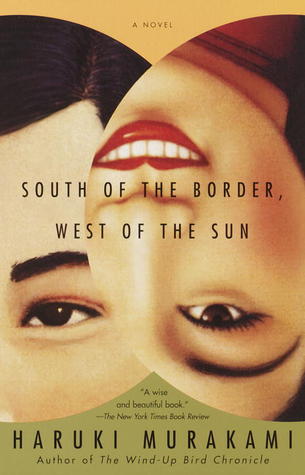
Published: 1992 (Kodansha)
Setting: Tokyo, Hakone
Summary: An only-child, Hajime, is a 12-year-old boy who falls in love with a girl named Shimamoto at the age of twelve. Shimamoto, who also an only child, is he first love. They separate before high school and eventually find their way back to each other through their love of jazz and each other, only to be separated by the novel’s conclusion.
Hajime is an everyday type, who after leaving Shimamoto for a different high school, yearns for her presence. While he is yearning, he dates a girl named Izumi who he has hist first time with. He cheats on Izumi with her cousin, which prompted Izumi to grow up to be a woman with a witchy demeanor.
He grows up and marries a women named Yukiko, and into a family whose upper-crust identity allows him to open a pair of jazz bars. He has a normal life, with a normal car, and two perfectly happy and normal children. Then, Shimamoto walks into his bar. He had tailed a woman years before who he thought was Shimamoto, due to the way she dragged her leg. It turns out the woman was Shimamoto, and that it turns out that she is as beautiful as he remembered her. Hajime and Shimamoto engage each other in a series of roundabout conversations that always avoid a confession of love. Shimamoto pops in and out of Hajime’s life, one day she is in the bar, the next she is taking three months away from him.
What kicks this novel into overdrive is Shimamoto’s request to Hajime. Shimamoto asks Hajime to go to a river to leave her dead babies ashes. This experience brings the two together, physically, for the first time as Hajime holds Shimamoto when she needs medical assistance. The experience brings them together, but Shimamoto leaves again. Hajime increasingly feels that he needs to leave Yukiko and his kids for Shimamoto. A final trip to Hajime’s cottage in Hakone brings Shimamoto and Hajime a long-awaited moment of ecstasy, and a final goodbye. When Shimamoto leaves for good, Hajime is empty. He confesses to Yukiko, but she accepts that he hurt her and is willing to continue their relationship.
This novel’s main character, like many in the Murakami canon, owns a jazz club. Sleek and mysterious women with physical ailments, mental health issues, or a 20-year trauma, hallmark character types of Murakami’s, are present in this novel as well. What separates this novel from his others is that Murakami lets the reader sit in a position of pity and discomfort for Hajime, while only letting us experiences tiny spikes of happiness. This novel should be purely melancholic, yet I find those brief high points to be exhilarating enough to sustain through the pity.
Quote of the book: “And I had no intention of lingering over the corpse of a beautiful song” (206).
When Hajime gave up Star-Crossed Lovers, he gave up Shimamoto, poignant.
Favorite character: Yukiko, in one light she is painted as a boring and helpless housewife whose life depends on the whim of Hajime. I see her as taking the strongest position of any character in this novel and accepting a man in spite of his faults is real love.
Favorite setting: The Robin’s Nest, Murakami describes jazz bars in ways that make you want to immediately pick up and go to one.
Favorite pop culture reference: Nat King Cole, I appreciate that this novel’s discography was centered so much on his music. Him and Count Basie need some more love than they get these days.
Please Stay for: The quality and depth of Murakami’s emotional writing.
Please Question: The only-child motif, I think it worked in some ways, but a larger meaning was lost on me. I wonder if Shimamoto leaving him would trigger a flood of emotions that might make him relate his emotional isolation to his only-child status, it didn’t. This is a minor critique at best.
 Will Reviews Things