Published: 1964 (Kodansha)
Setting: 1960’s Osaka
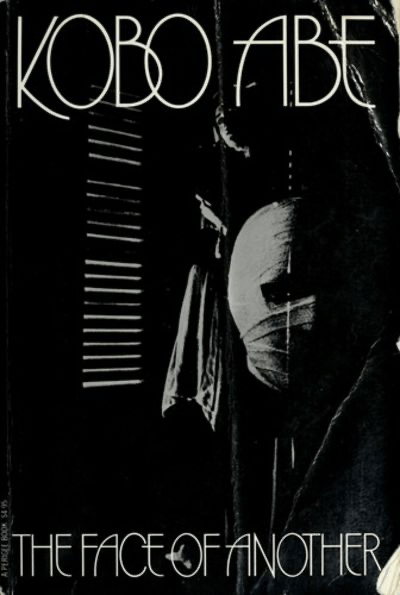
Summary: In this follow-up to Abe’s award-winning novel, The Woman in the Dunes, a leading plastics scientist’s face becomes disfigured from a chemical burn, spiraling him into isolation and alienation from others and his past self. This novel is split into three journals which the unnamed scientist uses to explain to his wife the months following his disfigurement. These journals chronicle how the scientist was spurred to make a mask, which he could wear in public, that would make his wife attracted to him again after his disfigurement. The scientist is at first obsessed with the proportions and expressions of the mask, settling on a mask which projects confidence. After creating the mask, the scientist tests the effectiveness of his mask at a public bath house, bars, and with his own wife in the second and third journals. Each of these public excursions reveals to him how far away from the mainstream of society his disfigurement, and manufactured identity, has made him. He devolves into longer and more confused diatribes, aided by sleeping pills and tranquilizers, which address the practicality of the mask and its consumption and reflection of his original self. The scientist, finally at one with his mask, hatches a plan to get his wife back by trying to seduce her with his mask on. When she agrees to this seemingly illicit affair, the scientist is distraught and rejects the mask as an impediment to his marriage. He tries to get rid of the mask by exposing that he is both the masked and unmasked man in his wife’s life by showing her his journals documenting the entire process. At the end of the novel, the wife reveals that she knew of the mask all along, and had played along with her husband in hopes that they would rekindle their relationship. However, after reading his journals she writes a note to the scientist explaining her choice to leave him because of his self-hatred and loathing. The scientist proceeds to permanently meld as one with his mask, and plans to kill his wife in retribution to her rejection of him.
Quotes of the book: “My plan was to attempt to break out of my jail–on that I would stake my very being–and accordingly my present condition was a suitably desperate state” (31).
This quote is an encapsulation of the mood, and the plot, of Abe’s novels. Abe created situations where ordinary humans were put through trials and tribulations which reveal more about our society and human nature than we wish to acknowledge.
Favorite Character: The scientist, he is the only character that is given a real voice, and thus is the only one worth mentioning.
Favorite Setting: The public bath, the scientist has a brief encounter with a tattooed man in the bathhouse which prompts questions about whether marks that are hidden or displayed are more virtuous.
Favorite reference: Hibakusha, this outcasted group of survivors from the atomic bombs in Hiroshima and Nagasaki serve as a historical reference point for the isolation the scientist feels in post-war Japan.
Please stay for: A meditation on identity in modern life.
Please Question: Why did Abe choose to add the Hibakusha as a sort of postscript, instead of at the beginning of his novel as he contemplates what the mask means. He had already decided to kill his wife by the end, I wonder if using it as foreshadowing would be a more effective choice.
 Will Reviews Things